
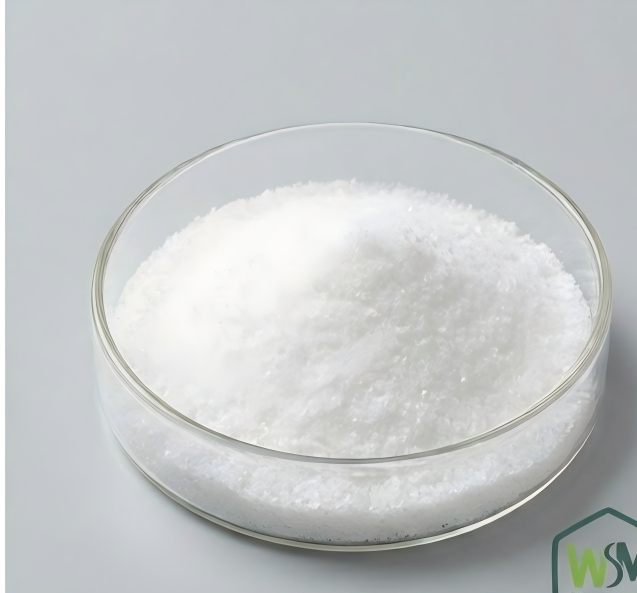
Food-Grade Glucono Delta-Lactone Manufacturer
Glucono delta-lactone (GDL, CAS 90-80-2) is the cyclic ester of D-gluconic acid. In water it gradually hydrolyses toward an equilibrium mixture containing gluconic acid and lactones, producing a time-dependent change in acidity. Food formulators use this behaviour in selected tofu, bakery, dairy, meat, and other controlled-pH processes.
WIS Biotech manufactures food-grade GDL in Shandong, China. Buyers should qualify the material against the intended food, destination-market rules, process conditions, assay, moisture, reducing substances, impurity limits, packaging, and batch documents. Current specifications, SDS, recent batch COA, applicable certificates, samples, and destination-based quotations are available on request.
GDL Applications
Tofu and Soy-Protein Coagulation
GDL is widely evaluated for silken and soft tofu because gradual acidification can support a fine, uniform protein network. Actual texture and yield depend on soy variety, protein and solids content, heat treatment, GDL dose, mixing, filling temperature, holding time, and equipment. Production parameters should be established through trials rather than copied from a generic formula. Tofu producers in the region can see GDL supply for Vietnam & Southeast Asia.
Bakery and Chemical Leavening
GDL can act as an acid component in leavening systems containing sodium bicarbonate. Gas-release timing depends on water activity, temperature, particle distribution, storage, and the complete leavening formulation. Premix and bakery manufacturers should validate neutralising value, batter hold time, volume, flavour, and shelf stability in the finished product.
Dairy and Plant-Protein Formulations
GDL can be evaluated for direct acidification or protein coagulation in selected dairy and plant-protein systems. Milk or plant-protein composition, buffering capacity, minerals, stabilisers, temperature, and target pH affect curd formation and texture. Finished-product trials and local regulatory review are required.
Processed Foods and pH Control
Food manufacturers may evaluate GDL where a gradual pH change is useful. The destination-market food category, technological purpose, permitted use conditions, purity criteria, sensory result, and process controls must be confirmed before commercial use.
GDL Supplier: Procurement Checklist
- Define the process: state the finished food, target pH or texture, temperature profile, holding time, and destination market.
- Approve the specification: compare assay, moisture, reducing substances, lead, appearance, and dissolution behaviour with a recent batch COA.
- Plan trials: provide the formulation basis, trial scale, expected result, and relevant processing constraints.
- Set commercial terms: confirm packaging, trial and annual volume, destination, delivery schedule, and Incoterm.
For process context, review the GDL tofu production guide before preparing a qualification plan.
Product Specifications
The values below describe the current general product specification shown on this page. They are not a declaration of conformity to every destination standard. The mutually approved specification and batch COA govern each order.
| Parameter | Specification |
|---|---|
| CAS Number | 90-80-2 |
| Molecular Formula | C6H10O6 |
| Molecular Weight | 178.14 g/mol |
| Assay | 99.0% min |
| Appearance | White crystalline powder |
| Solubility | Freely soluble in water |
| pH (1% solution, 25C, 1 hour) | 3.5 4.5 |
| Loss on Drying | 0.5% max |
| Heavy Metals (as Pb) | 20 ppm max |
| Arsenic (As) | 3 ppm max |
| Lead (Pb) | 2 ppm max |
| Reducing Sugars | 1.0% max (as glucose) |
| Available Grade | Food Grade |
Packaging and Supply
Standard packaging is 25 kg net multi-layer kraft paper bags with an inner PE liner. FIBC and other packaging options may be available for approved orders. Store sealed in a cool, dry, well-ventilated place away from moisture and direct sunlight under the conditions stated in the current product documentation.
Commercial MOQ: 500 kg. Qualification sample availability and lead time depend on grade, stock, packaging, destination, order volume, and courier or freight conditions; final availability, loading, freight basis, and delivery schedule are stated in the quotation.
Quality and Documentation
Each commercial shipment is supported by a batch COA and SDS, with origin and shipping documents prepared for the agreed transaction. WIS Biotech holds FAMI-QS, FSSC 22000, and BRCGS certifications. Halal, Kosher, and ISO certificates are held by Definly Chemicals. Buyers should verify the holder, named site, product/grade scope, validity, and destination-market acceptance against the current controlled documents. WIS supplies GDL as food grade only.
Frequently Asked Questions
How does GDL differ from citric acid or lactic acid?
GDL develops acidity gradually as it hydrolyses in water, while directly added food acids act immediately. This timing difference can be useful when pH-change rate affects coagulation, leavening, texture, or process control. The suitable acid system must be selected through finished-product trials.
How is GDL used in tofu compared with mineral coagulants?
GDL is commonly evaluated for silken and soft tofu, while calcium sulphate, magnesium chloride, and other coagulants can produce different texture and process behaviour. Soy solids, protein content, temperature, dose, mixing, and holding conditions determine the result, so the systems are not one-for-one replacements.
What starting dose can be evaluated in silken-tofu trials?
A trial range around 0.2%–0.3% of soy-milk weight is often used as a formulation starting point, not a guaranteed production dose. The final level should be established from the actual soy milk, protein and solids content, desired texture, thermal process, equipment, and local rules.
What is the MOQ and lead time for GDL?
The commercial MOQ is 500 kg. Qualification sample availability and lead time depend on grade, stock, packaging, destination, order volume, and courier or freight conditions; confirm them in the current quotation.
How should EU buyers interpret E575?
Glucono delta-lactone is listed as E575 in the EU food-additive framework, but permission is not blanket approval for every food. The finished-product manufacturer must confirm the relevant food category, technological purpose, conditions of use, current purity criteria, and labelling requirements, then qualify the supplier specification and batch COA. More for European gluconate buyers.
Are Halal and Kosher documents available for GDL?
Halal and Kosher certificates are held by Definly Chemicals, not WIS Biotech. Controlled copies may be requested where relevant. Buyers should confirm the certificate holder, named site, product/grade scope, validity, and destination-market acceptance before approval.
Request a GDL Quote
Request a quote or qualification sample and include the food application, process conditions, target result, specification, packaging, trial and annual volume, destination, and Incoterm. Ask for the current specification, SDS, recent batch COA, and applicable certificates.
Related Resources
Related Products
Food manufacturers can also review Gluconic Acid and Maltose.
Food manufacturers can also review Sodium Gluconate.